
Material Handling Services Built for Your Operation
Most material handling problems look like equipment problems. They’re usually not. Before Progressive Handling Inc. recommends a system, we study the sequence of operation from start to finish. The material handling services we deliver fix the operational problem, not just the symptom that surfaced first.
Storage Systems
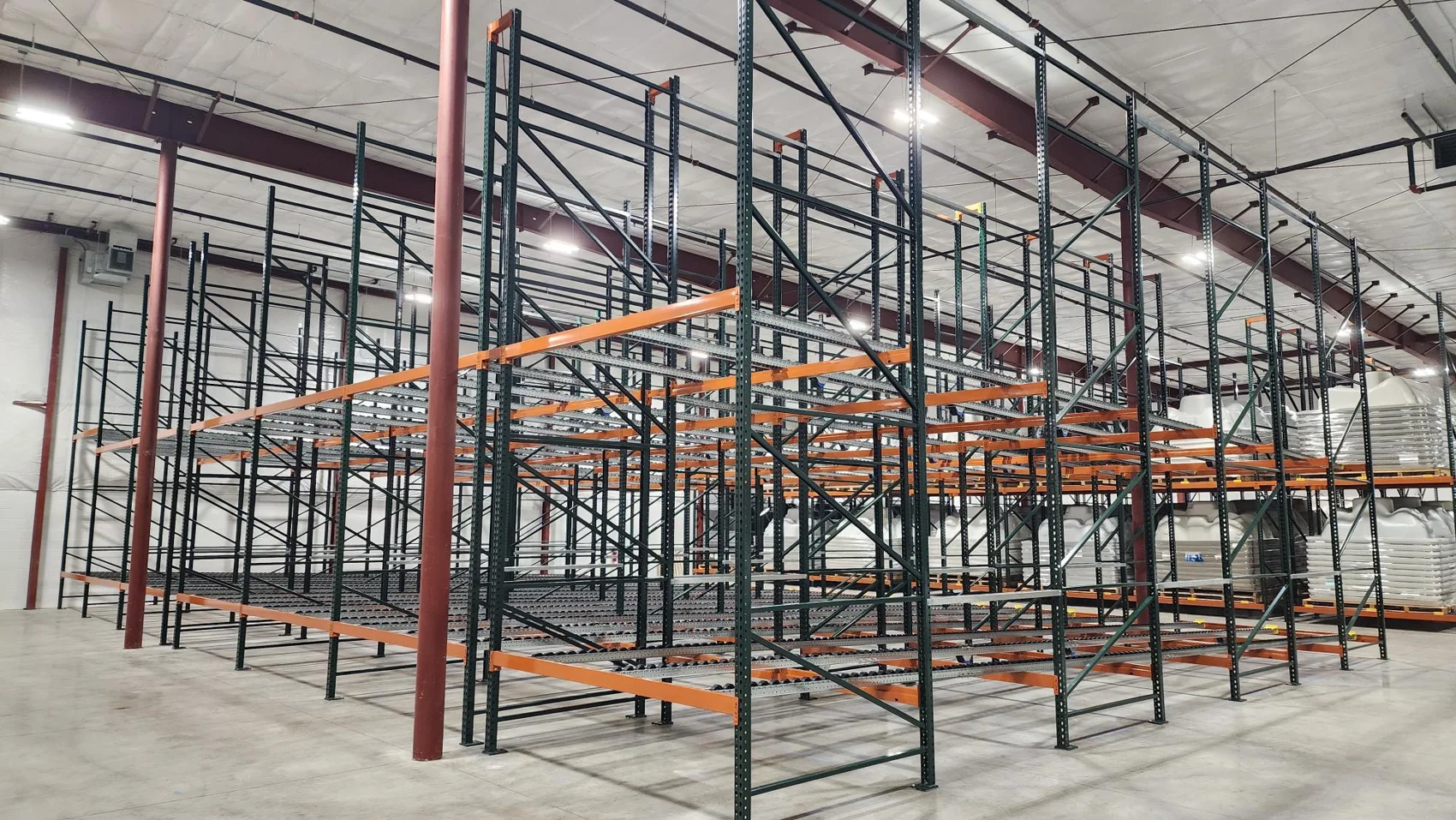
Many storage vendors start with a floor plan and a product catalog. PHI starts with your operation: product mix, pallet depths, fork truck clearances, weight tolerances, and point loading all factor in before a single component gets ordered. That’s what warehouse storage systems that hold up long-term require. Competitors who skip that analysis deliver uniform shelf heights and nothing optimized for how the facility actually works. Every pallet rack installation we spec is sized and rated for what’s genuinely going on in those racks.
One of our long-term customers came in with a specific directive: they were spending roughly $5,000 every other month on replacement rack components and wanted to stop replacing uprights entirely. We engineered a heavy-duty system built for 20 years of use. That customer now spends less than $5,000 per year on replacement components – and has for more than a decade.
When budget is the constraint, we find another way. A customer who lost inventory in a flood needed basic shelving fast with no insurance coverage. At the same time, another PHI customer was decommissioning racking at end of life. We bought the used rack at near-scrap price, modified it, and had the flood-affected customer set up for a reasonable price.
Conveyor Systems
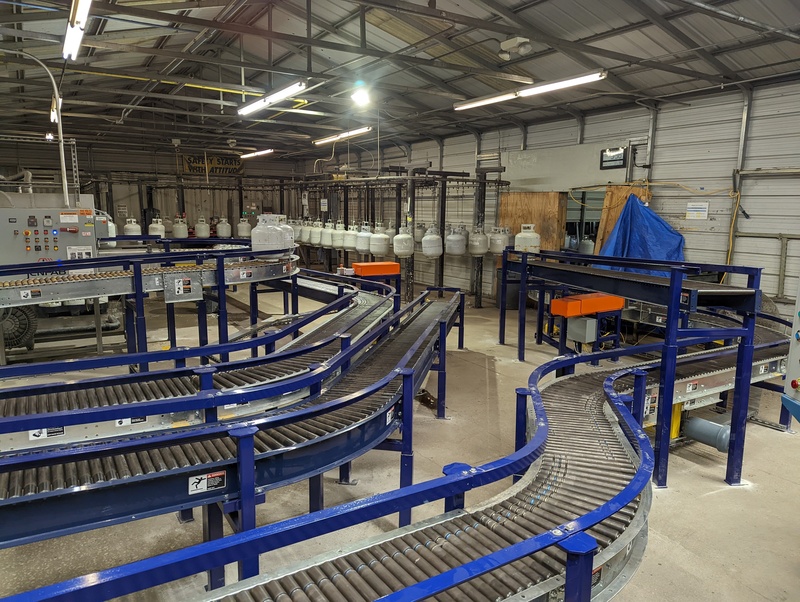
Customers come to us when a product needs to move more efficiently – faster throughput, better integration with existing equipment, or a system that’s been underperforming and needs a real fix. We analyze the existing industrial conveyor system before recommending anything. That includes running the numbers on repair versus replacement, not defaulting to whichever answer is easier to sell.
When a customer brought us a 13-year-old conveyor that had stopped performing reliably, the typical response would have been a full replacement at around $100,000. We ran the numbers differently. The air-drive system, not the whole conveyor, was worn out from age. Replacing the drive pans cost $13,000 and saved the customer roughly $87,000. That kind of calculation doesn’t happen unless someone is doing the engineering work instead of writing a replacement quote.
PHI also shows up when things go wrong outside business hours. When a beverage industry customer called at 12:15 a.m. on the 4th of July with a conveyor down – one of the biggest production days in that industry – we drove out, did some troubleshooting, brought in an electrical contractor, and had the line running by 3 a.m. That’s how we operate.
Rack Inspections
Damaged or overloaded pallet rack is one of the most underestimated safety and liability risks in a warehouse or distribution facility. Most facilities don’t have a formal inspection process in place. Many don’t know they need one until something fails. We’re certified to conduct pallet rack inspections and exceed U.S. safety standards, with international certifications in European and Canadian standards that go beyond American National Standards Institute (ANSI) recommendations. We offer three inspection tiers, from a basic damage walk-through to a fully engineered system report with replacement pricing.
Automation & System Integration
The inefficiencies that cost manufacturers the most are often the ones that have become invisible through repetition. When the same workaround gets built into every shift, it stops looking like a problem and starts looking like the process. Our role starts with watching the full sequence of operations before anything gets designed. Most projects involve integrating conveyance with packaging and palletizing equipment.
When we installed an automated conveyor system for an egg processing facility, the system didn’t perform correctly after installation. The manufacturer had under-engineered the drive capacity for the load. We had the engineering background to diagnose the problem, re-engineer the system using existing equipment, and rebuild it correctly. We scheduled the mechanical teams and controls engineers, reprogrammed the timing, completed the rebuild, and never made it the customer’s problem. The system ran at 100% after two nights of work. Five years later, that same customer came back to us when they wanted a full system replacement.
Engineering Studies
Some customers know their operation isn’t running as well as it should. They don’t always know why. We put a team member on-site for days: watching each station in the operation, taking detailed notes, and building a full picture of where time, labor, and space are being lost. The output is a detailed report and a proposal for what we would do about it. We target a 2-year return on investment on every project and engineer to that threshold from the start. What we propose is sized to what the operation can justify, not what looks impressive on a spec sheet.
The findings are often things customers walk past every day but don’t see. We’ve identified facilities routing all incoming and outgoing product through the same dock door when an empty dock door sat at the other end of the building. Running product in one end, through the process, and out the other eliminates double and triple handling.
We recently quoted a project to dismantle a mezzanine at a closing facility in Arizona, reconfigure it, and reinstall it in an Ohio location. The customer gets a functioning system without paying for a new one.
Maintenance & Replacement Parts
When equipment goes down, the clock starts immediately. We solicit bids from multiple vendors on every parts request and turn around quotes within 48 hours – whether it’s conveyor maintenance services, replacement components, or parts for a system we installed years ago. For customers with long-standing relationships, we already know the equipment, which means faster identification and less downtime.
The Goal Is Always the Same
Every project PHI takes on – whether it’s a storage redesign, a conveyor repair, or a week-long engineering study – comes back to one question: how does this customer operate, and what does a solution that fits that operation look like?
That’s not a tagline. It’s the work. Tell us what you’re dealing with, and we’ll tell you what we can do about it.