
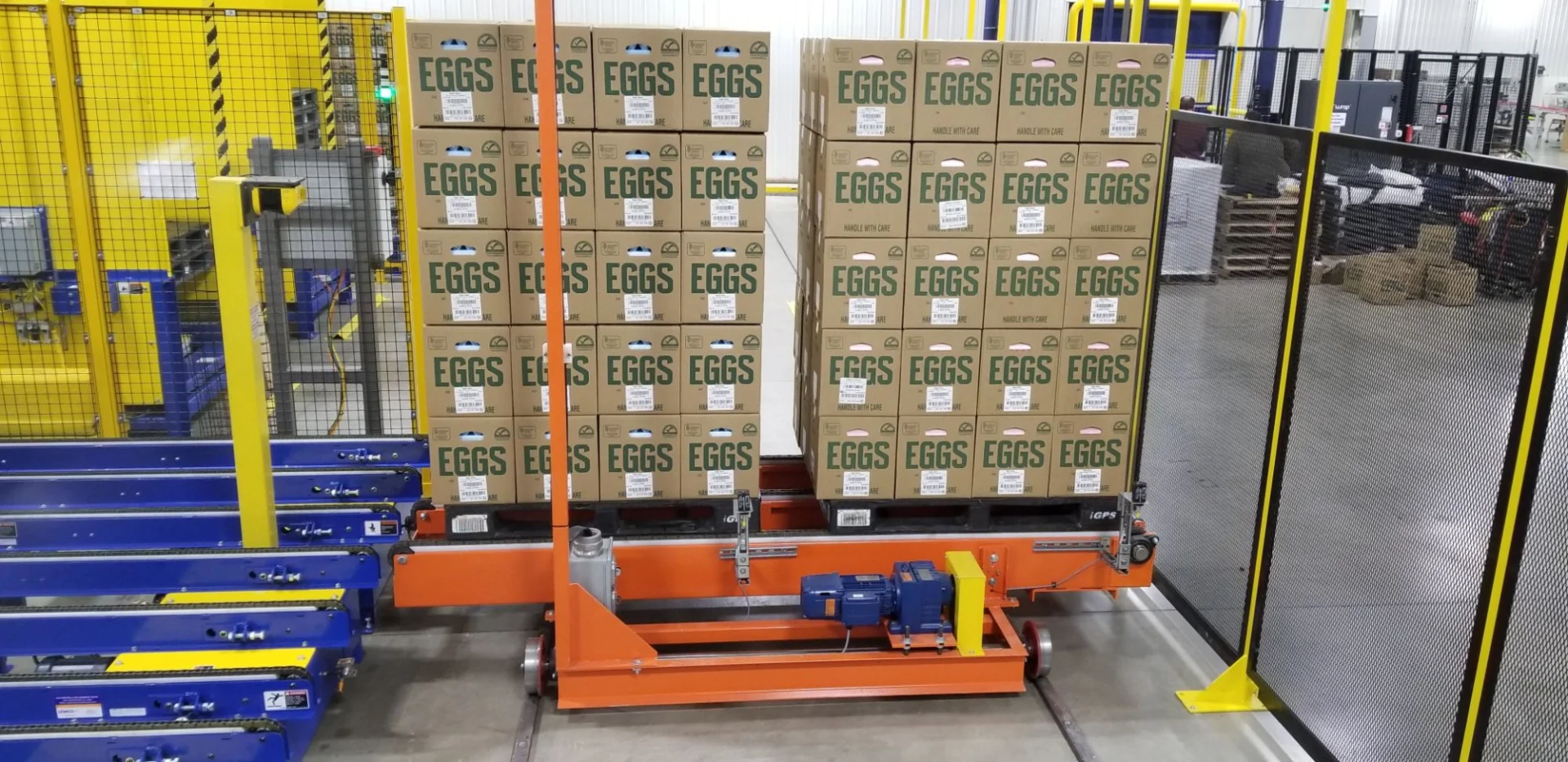
Production Line Automation and System Integration
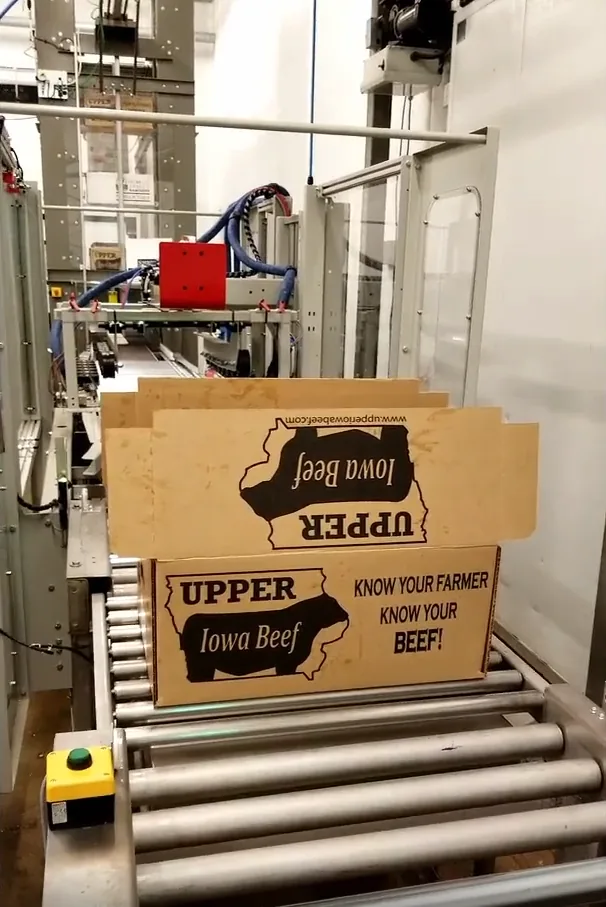
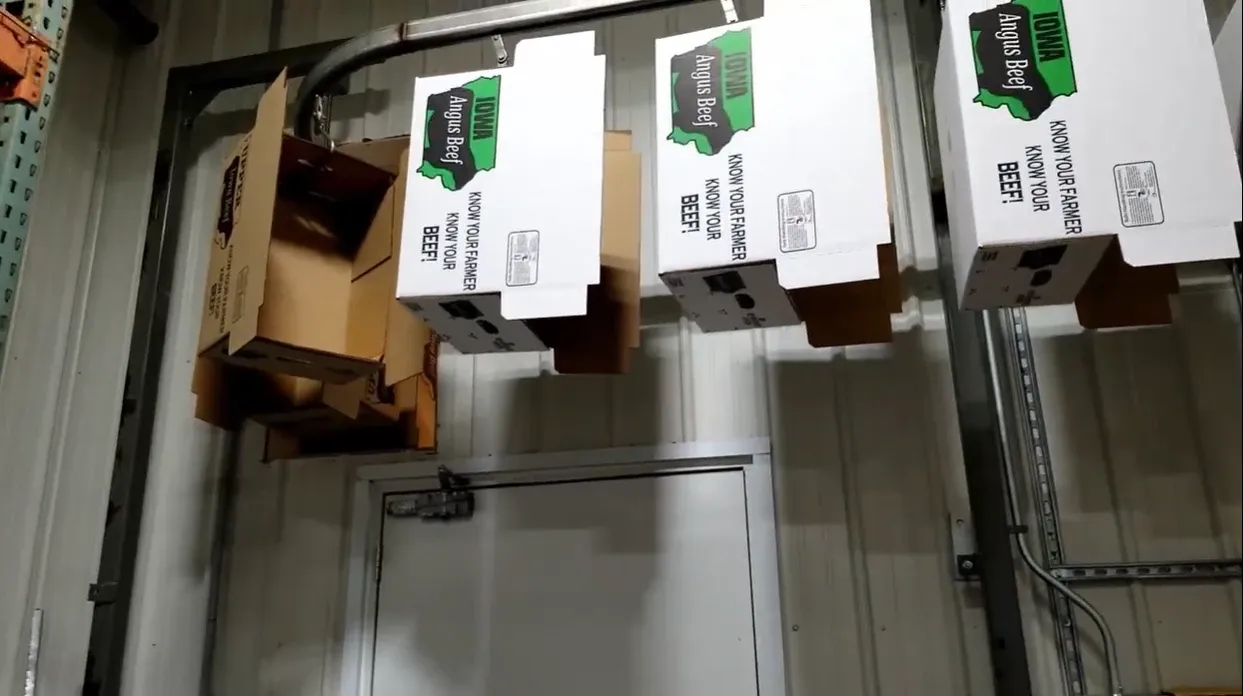
Production line automation starts with a number: the rate your plant needs to hit. You tell us the target, and we design a system to reach it. Upper Iowa Beef went from processing 250 head of cattle a week to 1,600 on an integrated system we designed.
Before anything gets designed, we visit the facility and watch the current process. We work with you to define the system’s start and end points and throughput rate. The question is how to move product from point A to point B fast enough to hit the rate.
What We Design and What Our Partners Build
Every integration project divides the work this way:
- We design the system and quote all the material
- Equipment manufacturers quote the machines we specify
- A controls house bids the controls and the installation
- Your project manager coordinates everything from the day the order comes in and oversees the installation, so you deal with one company
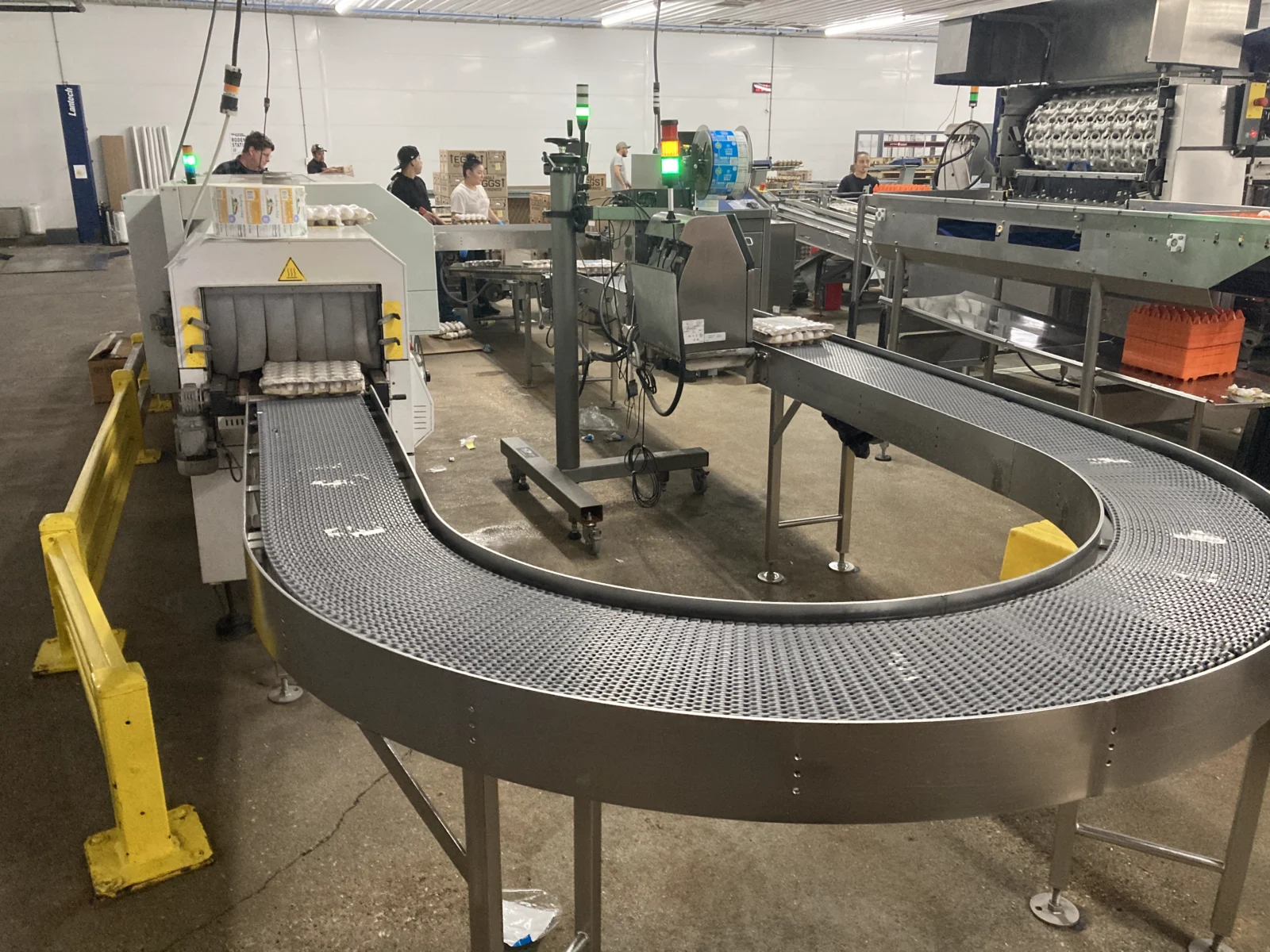
On one egg processing line, the equipment manufacturer had under-engineered the drive for the load, and the system fell short after installation. We re-engineered it around the existing equipment and rebuilt it at our expense.
Packaging line integration follows the same model. Most of the work falls into two areas:
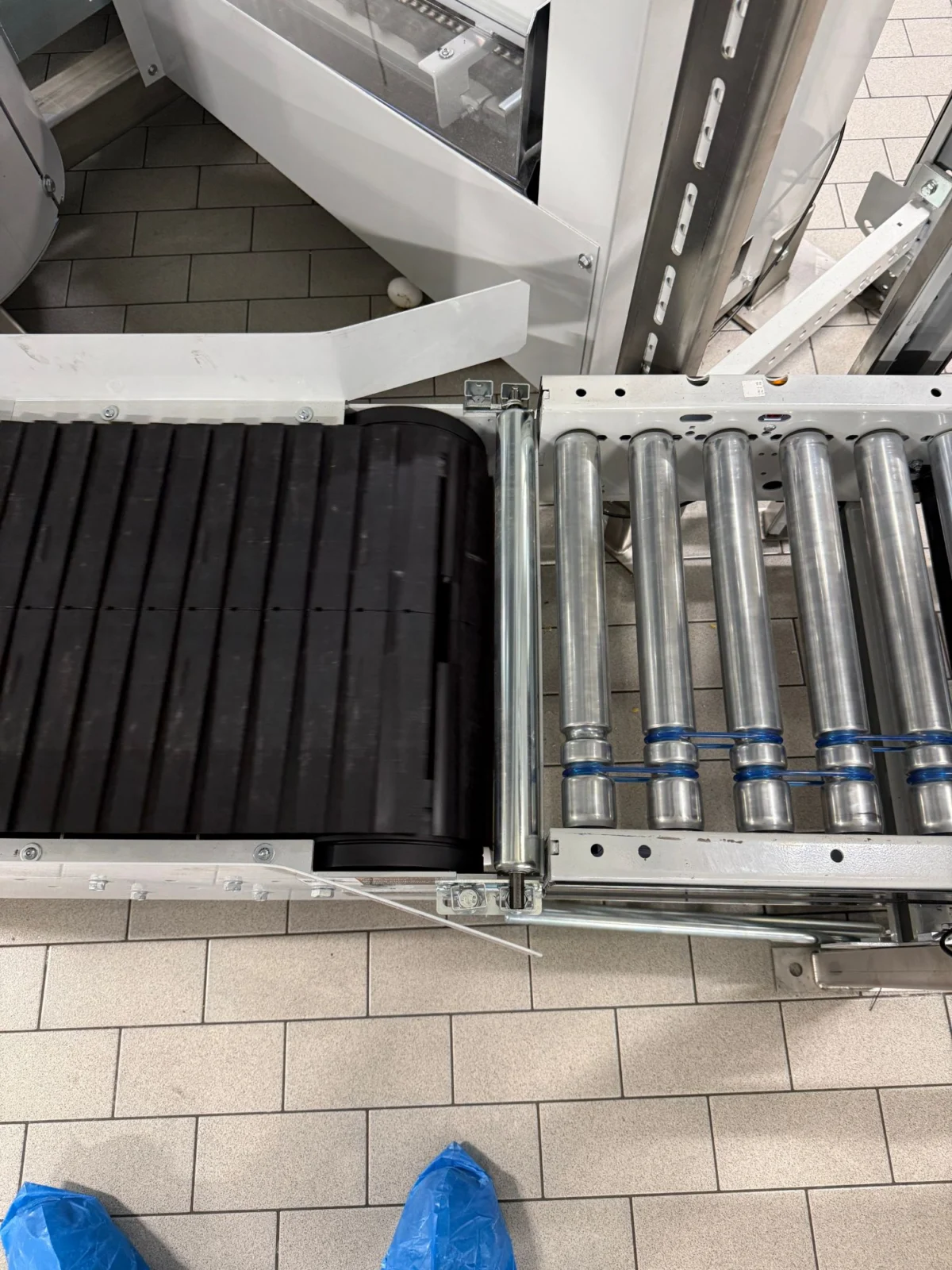
- Conveyance: case and pallet conveyors, which our conveyor systems page covers
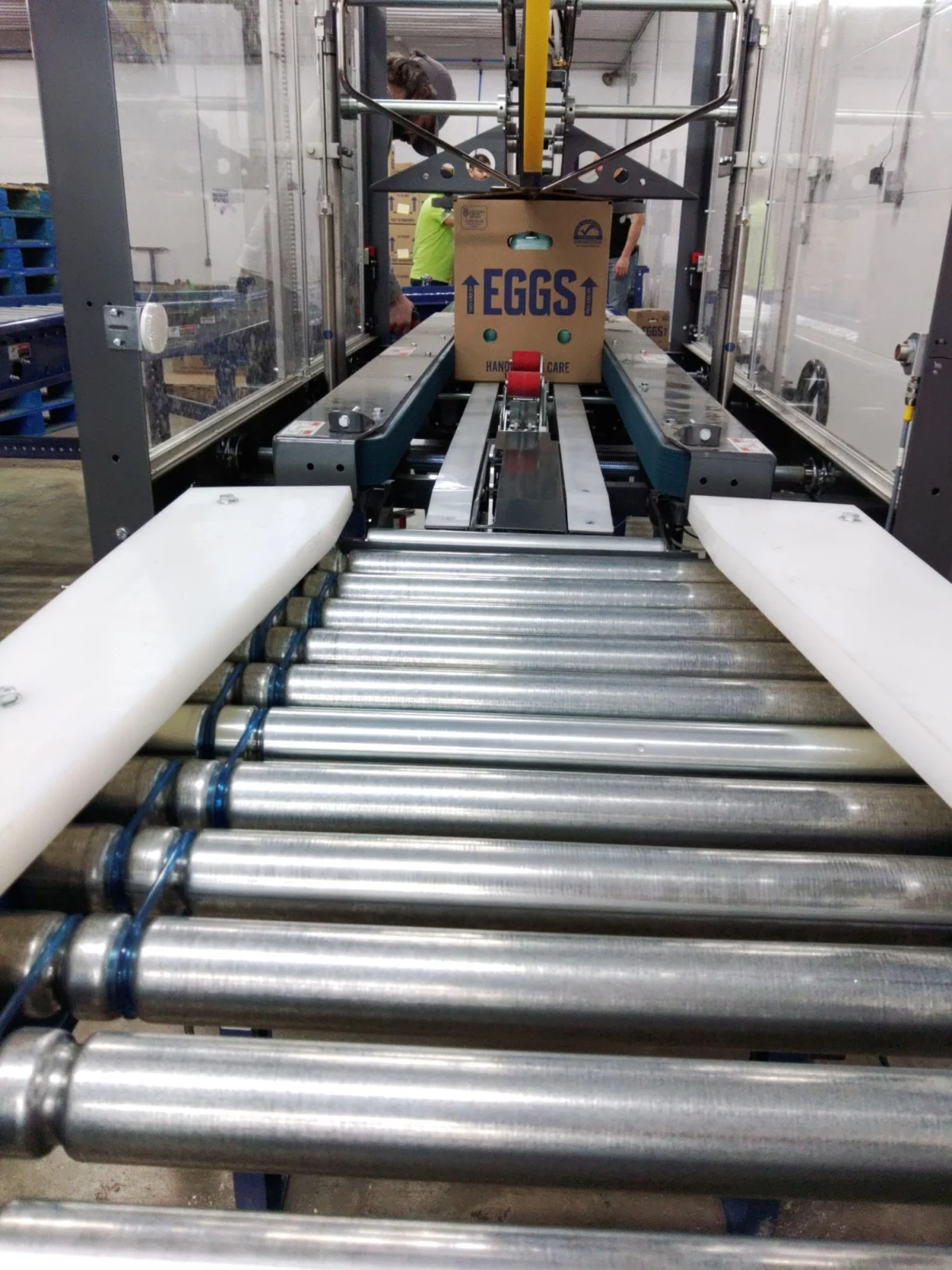
- Packaging equipment: machines such as case erectors and stretch wrappers from outside vendors, which we integrate into the line
Tying Into a Live Operation
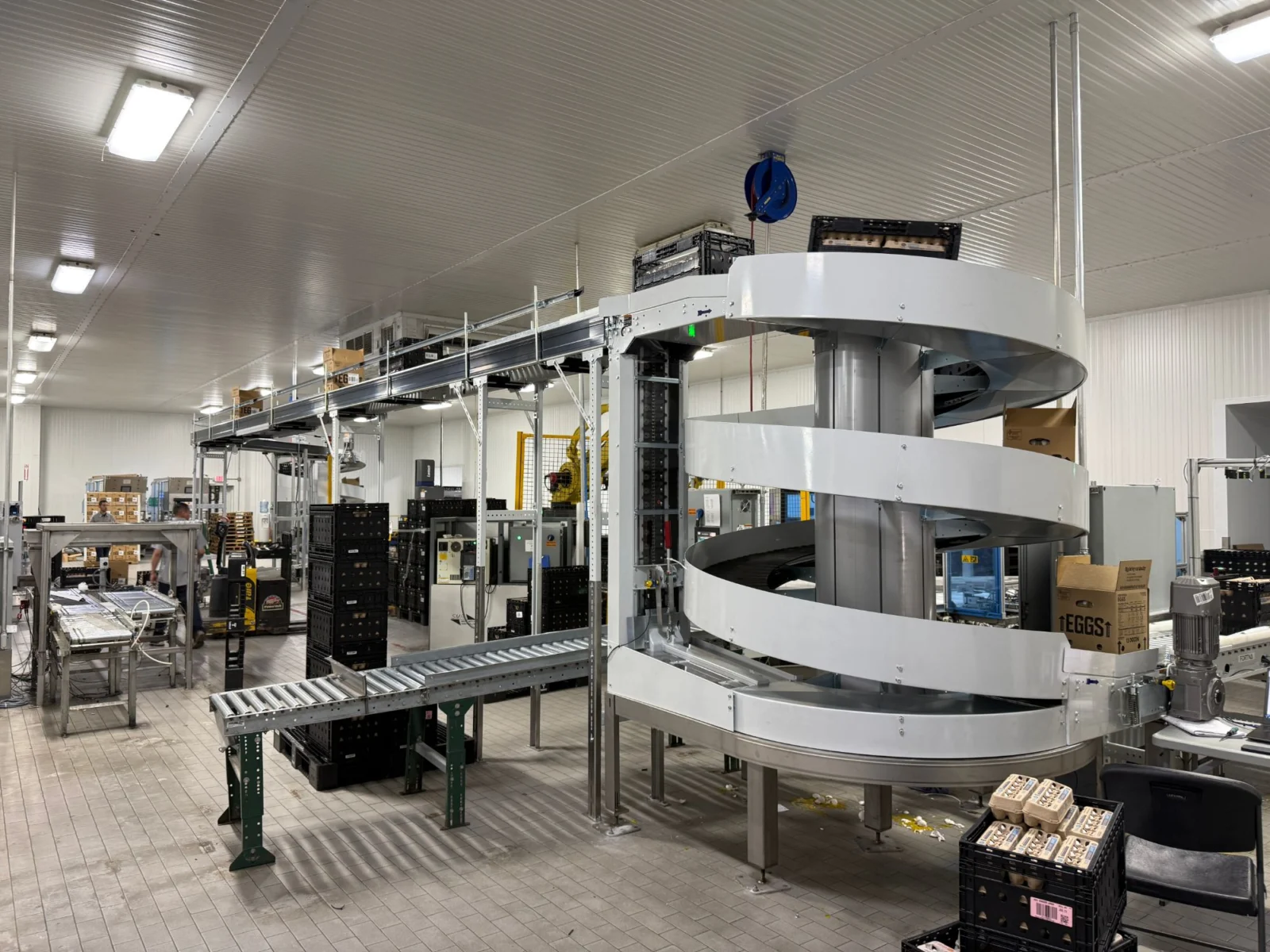
Manufacturing automation integration rarely starts from a blank floor. Most projects add equipment to a process that is already running, feeding machines you already own. The exception is egg processing, where several recent projects were brand-new buildings.
Legacy equipment integration means working around live production, in two steps:
- Install as much equipment as possible around the current process
- Take a day or two to complete the cutover and start up the new system
In egg processing, where production never stops, installation usually runs on second and third shifts. Some downtime almost always comes with the cutover, so we talk through it with you and adjust the schedule together.
Matching the Level of Automation to the Goal
Production line automation comes in several levels. We start with your objective and budget, then choose the level that meets it:
- Manual jigs or fixtures
- Semi-manual processes with automated jigs and fixtures
- Semi-automated processes that still need some labor
- Fully automated processes that need none
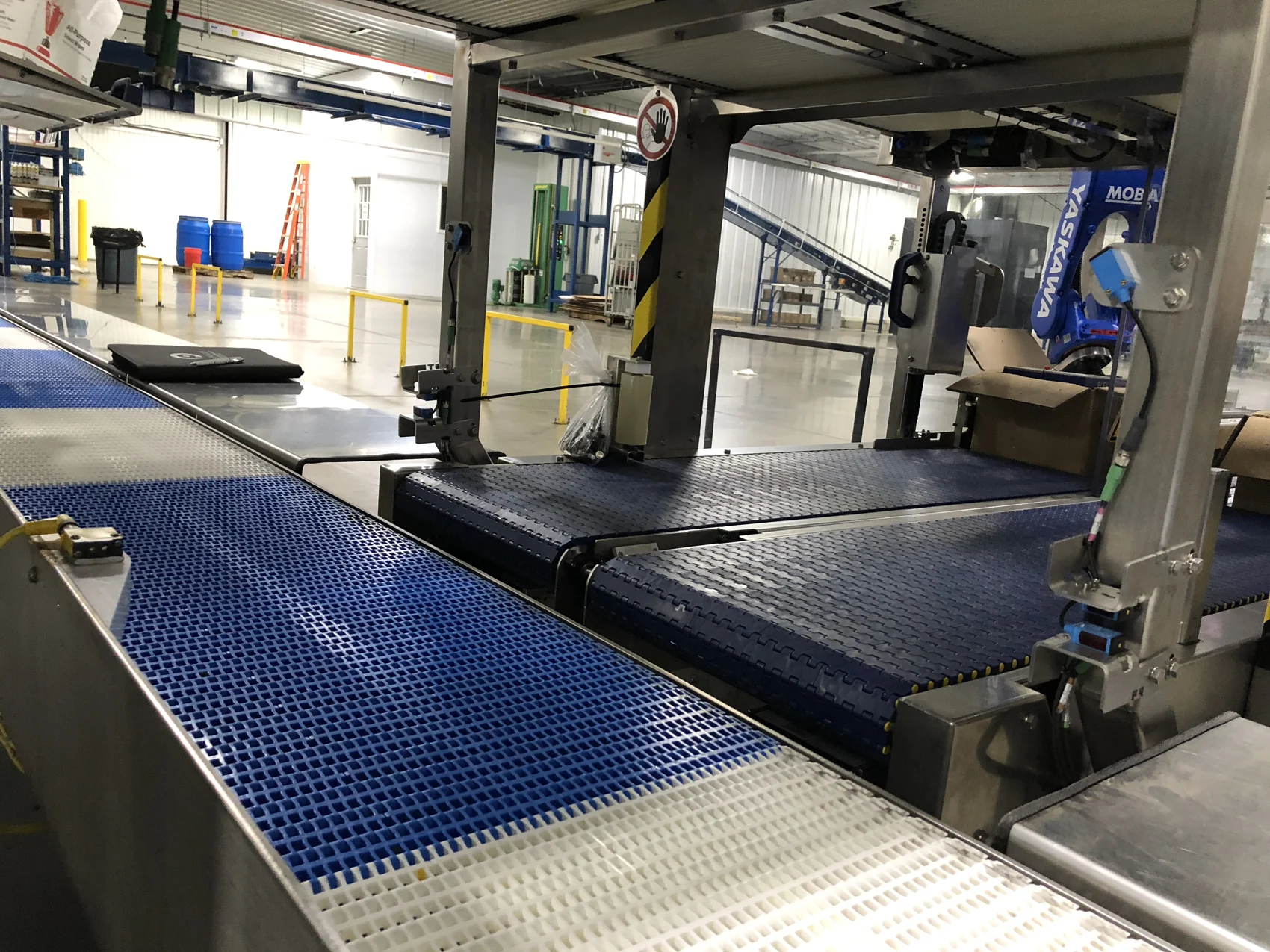
When a big goal outruns the budget, we automate the part that delivers the most production for the money and add on as production grows. Projects can run in phases.
We recommend against automation when throughput won’t change or the investment won’t pay you back. When the right level is unclear, an engineering study puts numbers behind the choice.
Automation & System Integration FAQs
Are you sure you can do this?
We hear this question first, and it usually brings two more: whether we’ll hold the schedule and whether the system will meet the rate. We give you a timeline we can meet, and your project manager owns it from the order forward.
Can you lower the price?
Most of the time, the quoted price is the price. If you share your budget, we’ll design the system to stay within it.
When do the service manuals arrive?
Service manuals typically arrive with your final invoice.
Ready to Talk Through Your Automation Needs?
Every automation project starts with a conversation about the rate you need to hit. Tell us what’s on your floor today, and we’ll tell you what production line automation would take to get there.